Central Vacuum Systems
Clean. Silent. Built-in.
Designed for simpler cleaning and healthier, more efficient spaces - at home, at work and beyond.
35+
Years of experience
380,000+
Central vacuum units
80+
Countries worldwide
What is your sector?
Resources for design and installation
Designed to make life easier for professionals and installers.
What is a central vacuum system?
An integrated cleaning system for the entire building.
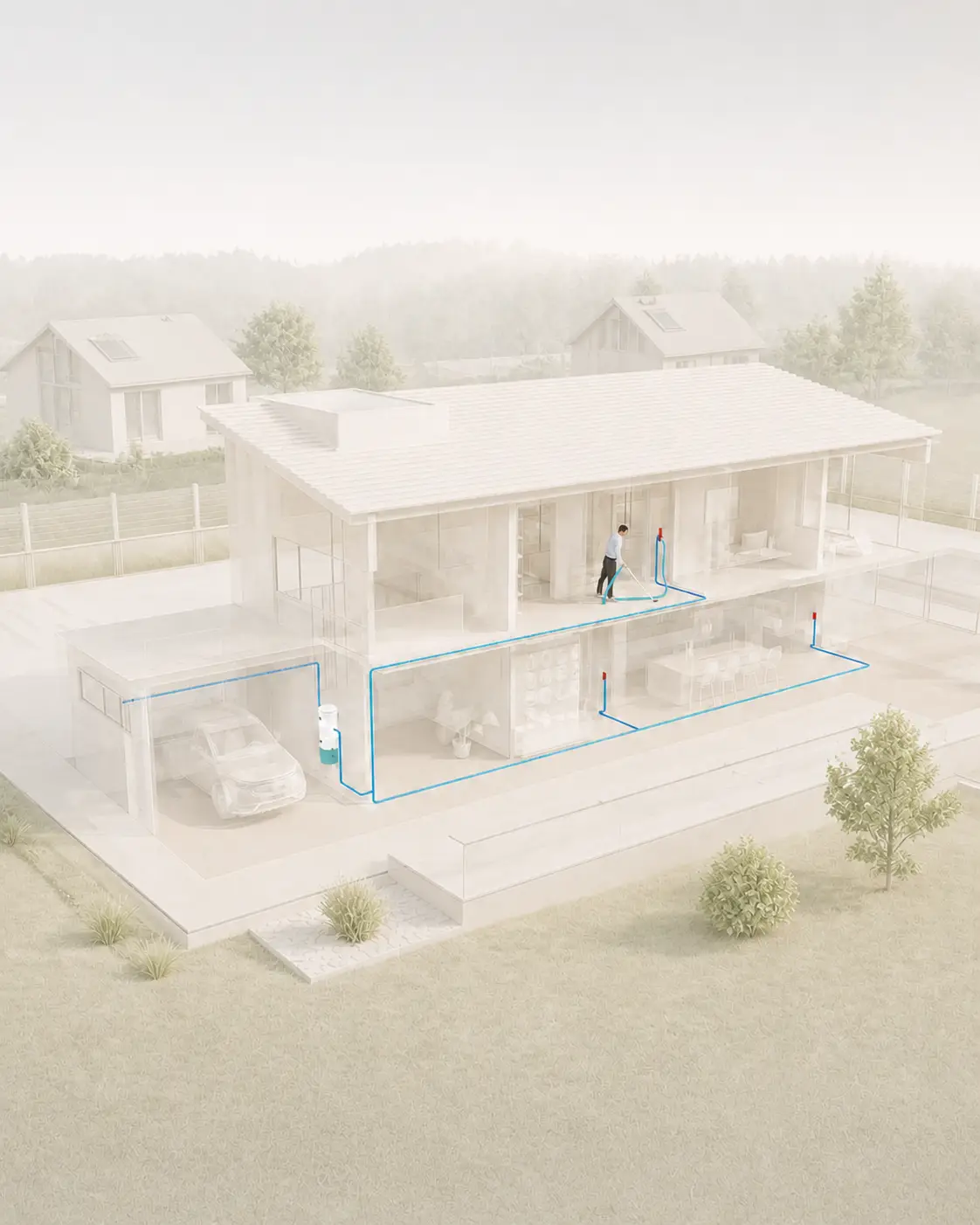
A central vacuum system replaces portable vacuum cleaners with a single powerful unit permanently installed in a technical room. A network of pipes runs through walls and floors across the building. Users connect a lightweight hose to any wall inlet: all dust and exhaust air is channelled straight outside, and is never released back into occupied rooms.
- Air quality.
- Quiet rooms
- Efficiency
Why switch?
More practical, more durable, healthier
Permanently installed system
The advantage is in everyday use
Less weight to move around, fewer replacements over time and better comfort at home thanks to the motor being far from living spaces.
Easier to use
Only the hose to handle: faster cleaning, without dragging the unit from room to room.Quieter in the rooms
The motor sits in a utility room, garage or service space, away from the living areas.More reliable over time
No batteries to recharge or replace and a larger collection capacity for less frequent maintenance.
Two options, the same compromises.
They differ in format, but both require more handling, more noise and more frequent replacements.
Cordless
Handy at first, but with clear limits.
Less powerful
More limited performance compared to a central system.Short battery life
Reduced runtime and degradation over time.Reduced capacity
Smaller filter and dust container.
Traditional
More continuous, but awkward in daily use.
Bulky
Unit and cable to drag between rooms and floors.Exhaust air odour
The expelled air can leave a less pleasant feeling in the rooms.Noisy
The motor runs right inside the living spaces.
35+
Years of experience
80+
Countries worldwide
380,000+
Installed systems
3
Market segments
Why Disan?
Designed and manufactured in Italy.
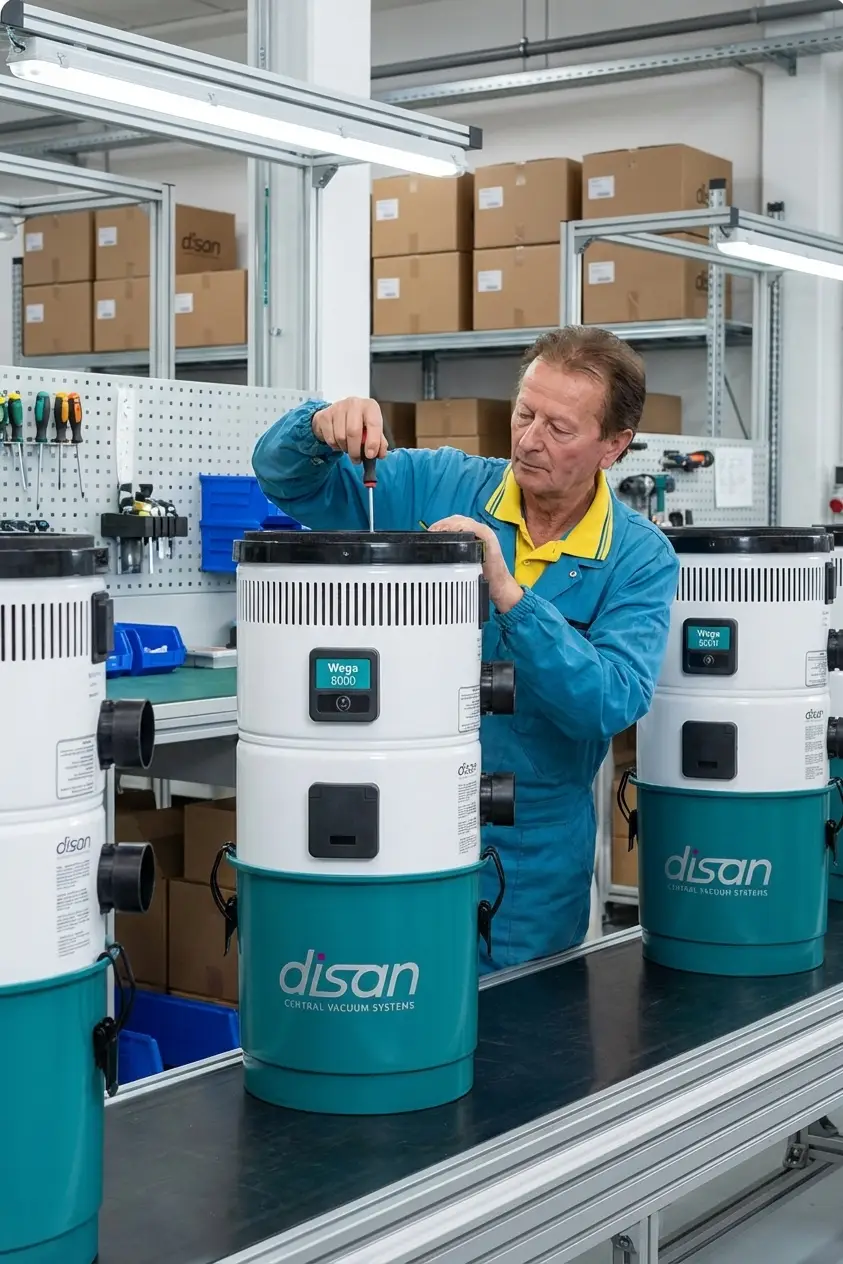
For over three decades, Disan has designed, manufactured and refined central vacuum systems entirely in-house — from compact residential units to large industrial installations across Europe and the Middle East.
Fully in-house design and production
Every unit is designed, tested and manufactured in our plant in Italy.
International certifications
CE, ATEX and recognised energy labels across the entire product range.
From homes to large facilities
A complete range — from single apartments to food production plants.
Support from concept to commissioning
Technical assistance for designers, installers and facility managers at every stage.
For architects, engineers and designers
We speak your language from day one.
Central vacuum systems work best when they are specified in the early stages of a project. Our technical team provides support on pipe routing, MEP coordination, BIM objects and all tender documentation — at no cost during the design phase.
Trusted in buildings worldwide.
More than 10,000 customers in over 80 countries worldwide use Disan systems.
Let’s get started
From the first idea to a working system.
01
02
03
Share your project
Send us floor plans or a short description — new build, renovation or existing building.
Receive a tailored concept
We design a complete central vacuum system concept with pipe routing, unit selection and documentation.
Installation and commissioning
Our partner network takes care of installation, testing and training for all users.
Common questions.
If the common questions are not enough, we are here at any time to clear up any doubts you may have.
Can a central vacuum system be installed in existing buildings?
Yes. Central vacuum systems can be installed in both new and existing buildings. During renovations, pipes can often be routed through attics, basements, false ceilings, cupboards, or service shafts with minimal disruption.
How noisy is the system inside the rooms?
Very quiet. Because the motor unit is installed away from living areas—such as in a garage, utility room, or basement—you only hear the airflow, not a loud vacuum motor.
What maintenance is required?
Maintenance is minimal. The large dust containers only need to be emptied very seldomly and filters last for 10 years.
How long does a system last?
Residential systems are designed to last 20 years, while commercial systems have a 30-year useful life.
What happens if the system stops working?
First, check the power supply, dust container, filter, hose connection, and possible blockages. If the issue continues, your installer or an authorized sce partner can diagnose and repair the relevant component without major building work.
Let’s design your system together
Our technical team works alongside you to define the central vacuum solution best suited to your project, from the first floor plan to the final configuration. Share your plans with us and we will help you develop a system tailored to your building, your activities and your performance goals.